

The Blog

Safe Exercise During IVF and Egg Freezing
If you’ve been told to “just stop exercising altogether” during IVF or egg freezing, you’re not alone.
It’s one of the most common pieces of advice—and one of the most frustrating. Especially if movement is a big part of how you take care of your body and manage stress.
The truth is, you don’t actually need to stop exercising completely. But you do need to make some big adjustments to how you move.
This guide breaks down exactly what’s happening in your body during a retrieval cycle—and how to exercise safely through it. I’ll be your guide — I’m Julia Neto, a Prenatal and Postpartum Corrective Exercise Specialist with a decade of experience, and I collaborated with leading fertility experts to create a safe exercise program for fertility treatments.
Please note that exercise during fertility treatments is very individual, and you should always consult your doctor before undertaking any exercise. Even if your doctor seems against exercise, you should feel comfortable having an open conversation with them about it. Of course at the end of the day, your doctors are the experts in your own individual care. The information in this article is purely informational, and not medical advice.
Understanding What Your Body Is Going Through
During a typical menstrual cycle, your body matures just one egg for ovulation.
During IVF or egg freezing, hormone injections stimulate your ovaries to mature multiple follicles at once—sometimes 10, 15, or more per ovary.
This causes your ovaries to grow and swell significantly, from the size of a walnut to potentially the size of an orange!
That change in size is the major reason exercise needs to be modified. Because your ovaries are enlarged and more sensitive, certain movements can increase risk, especially as you get closer to retrieval.
The Biggest Risk to Be Aware Of
The primary concern with exercise during this time is ovarian torsion. This happens when the ovary twists on itself, cutting off blood supply. It’s rare, but serious.
Ovarian torsion is most likely to occur:
- During the later days of stimulation
- Right before retrieval
- Shortly after retrieval
This is why exercise must be strategically modified, primarily during the times mentioned above.
Why You Should Still Move
Despite the risks, many fertility doctors now support continued movement when done correctly.
Exercise during IVF can:
- Support blood flow and circulation
- Regulate your nervous system
- Reduce stress (which directly impacts fertility outcomes)
- Help maintain strength and routine
- Improve sleep and overall wellbeing
For many women, removing exercise completely actually adds more stress, not less.
The Golden Rule: Support, Don’t Stress
During IVF, exercise should feel grounding, energizing, and supportive, NOT exhausting, highly intense, or draining. Think of this phase as maintenance and nervous system care, not performance mode or personal bests.
Movements to Avoid During IVF & Egg Freezing
As soon as you begin stimulation (and especially after the first few days), start modifying:
🚫 Avoid:
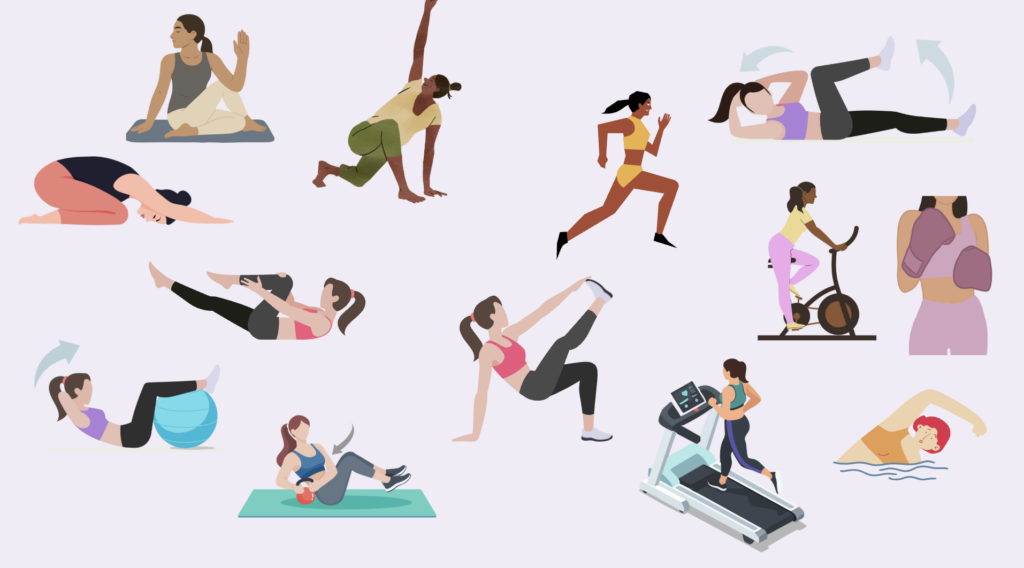
- Running and jumping (high impact)
- Twisting movements (including many yoga poses)
- Core-heavy or abdominal compression exercises
- Sports like tennis or golf (rotation-heavy)
- Fast, jerky transitions between positions
These movements increase pressure or instability around the ovaries.
What You Can Do Instead
There is still a lot you can safely do.
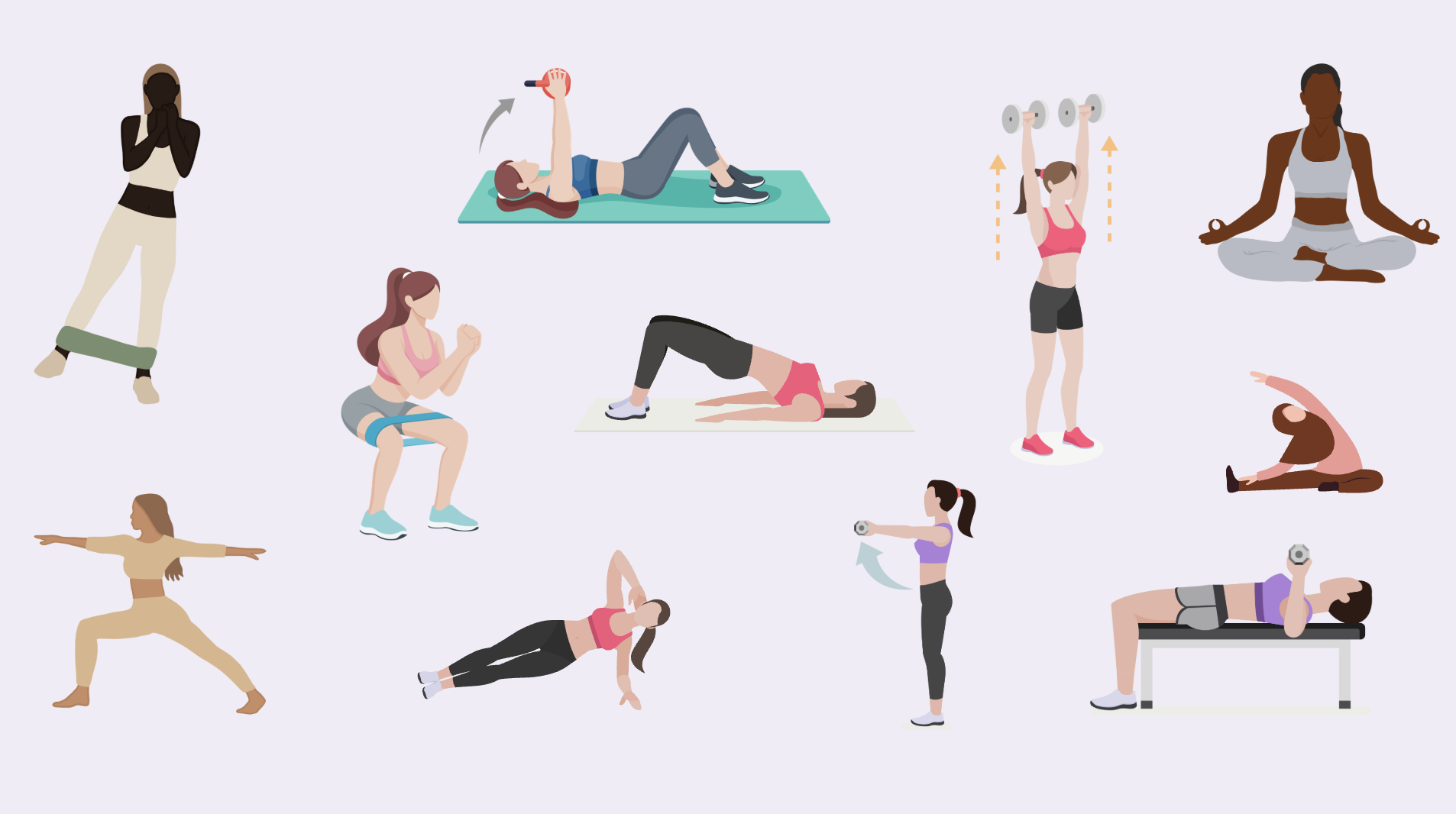
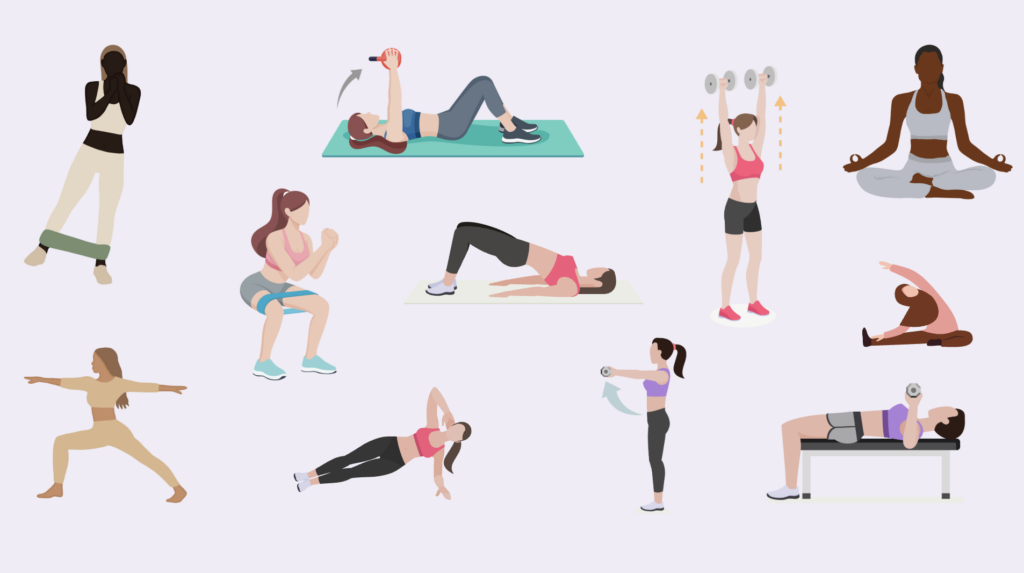
✅ Focus on:
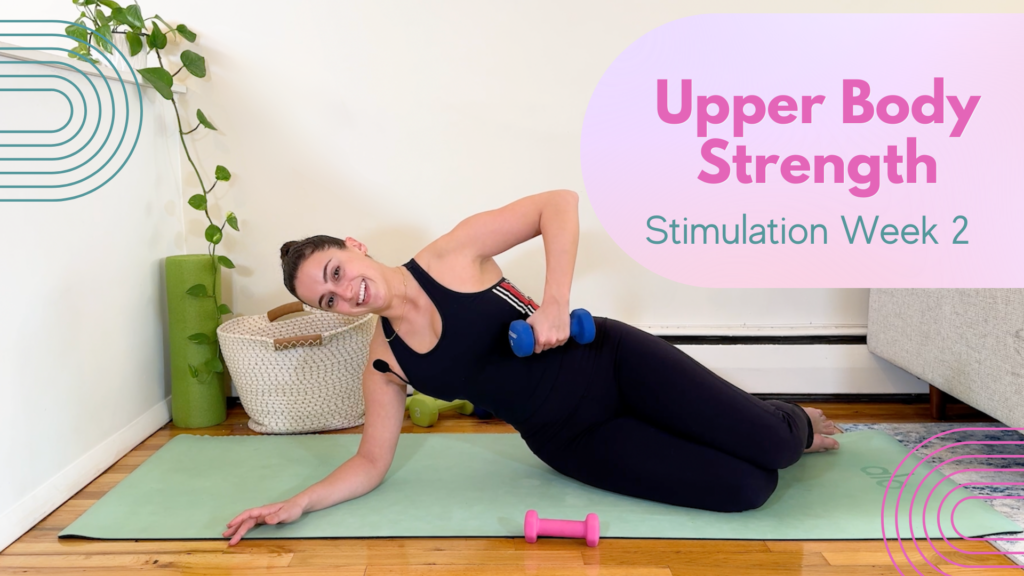
- Low-impact strength training
- Isolated muscle work (arms, glutes, legs)
- Open positions (squats, bridges, standing work)
- Walking
- Gentle mobility and stretching
- Breathing and nervous system work
Examples:
- Glute bridges
- Standing arm exercises
- Side-lying leg work
- Side planks (with proper form)
The key: keep the pelvis area open and avoid compression and impact
How Your Workouts Should Change Over Time
🗓 Week 1 (Early Stimulation)
- You may feel mostly normal
- Light modifications begin (reduce impact, twisting, core work)
- You can often continue modified versions of your usual workouts
🗓 Week 2 (Late Stimulation → Retrieval)
- Ovaries are enlarged and more sensitive
- Fatigue, bloating, and discomfort increase
- Shift to shorter, gentler, more controlled workouts
- Focus on open positions and simple movements
🛑 Retrieval + Early Recovery
- Full rest is recommended for 2-3 days before and after retrieval
- Light walking only
- Expect bloating, fatigue, and discomfort
🔁 Returning to Exercise
- Ease back in gradually
- Start with gentle strength work
- Progress slowly before returning to higher intensity
Listen to Your Body (More Than Ever)
This is not the time to “push through.” Pull back if you experience pain or pressure near the ovaries, dizziness, rapid heart rate, and mention your symptoms to your doctor.
Also consider how you feel from one day to the next. If you’re experiencing fatigue, nausea, or dehydration, resting may serve you better on that day than a workout would.
The Mental Side Matters Too
For many women, exercise is a key stress outlet. And during IVF, stress is not just emotional—it’s physiological. Maintaining some form of movement can help you feel more like yourself, give structure to your day, and support emotional regulation
You don’t need to lose your routine, you just need to adapt it.
Final Thoughts
Exercise during IVF and egg freezing isn’t as all-or-nothing as it’s made out to be. To workout during IVF you must simply understand what your body is going through, make smart, intentional adjustments, and support your system rather than overwhelming it.
When done right, movement can be one of your most powerful tools during this process.
Also consider how you feel from one day to the next. If you’re experiencing fatigue, nausea, or dehydration, resting may serve you better on that day than a workout would.
You don’t have to figure it out alone, that’s what I’m here for!
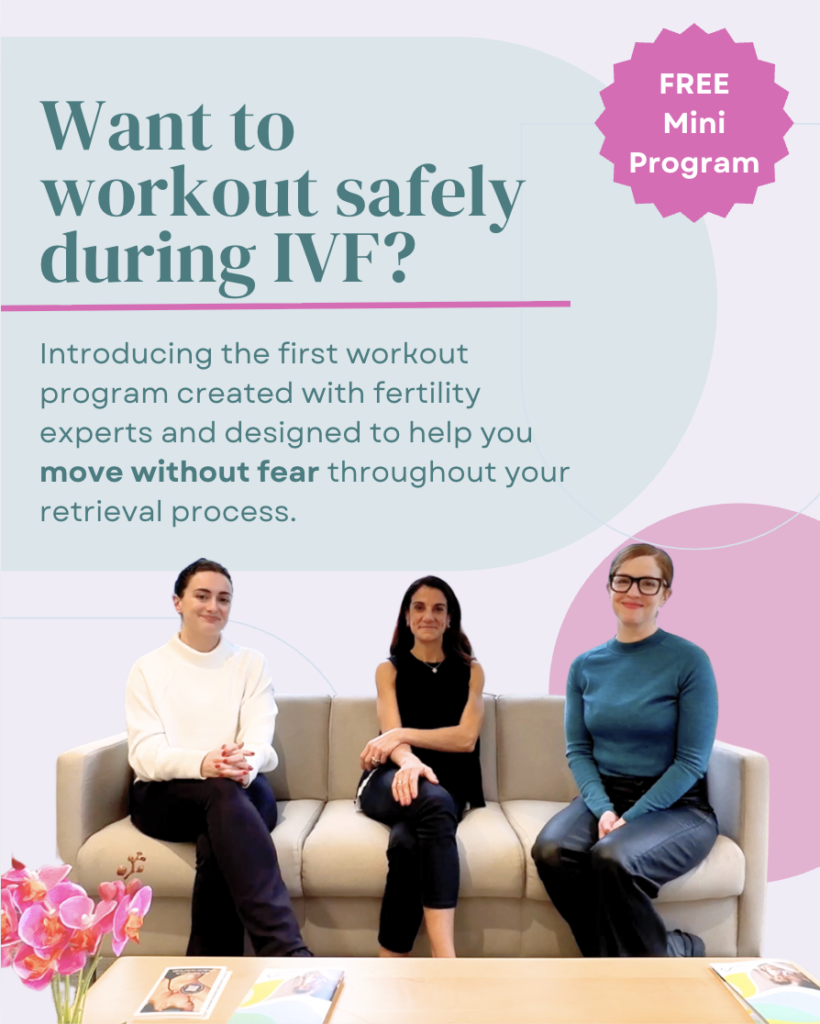
Don’t struggle to figure things out yourself. I’ve created a free IVF and Egg Freezing Workout Program to help you move safely throughout the entire process. It is full of safe fertility friendly workouts that are approved by a renowned reproductive endocrinologist, and is packed with helpful information from experts in all domains of women’s health. Click below to download the program for free and continue your learning.


Comments will load here
Be the first to comment